
Introduction
We’ve all been told to save money. Put it in the bank, watch it grow, sleep well at night. And yes, saving is a great habit. But here’s the uncomfortable truth — saving alone won’t build wealth.
If you’re parking your hard-earned cash in a regular savings account and calling it a day, you might be losing the money game without even knowing it. Let’s talk about why regular investing is the real move — and why your future self will thank you for making the switch.
The Problem with Just Saving
Saving is safe. It’s predictable. And it gives you peace of mind. But the average savings account in the Philippines (and in most countries) offers an interest rate of around 0.10% to 1% per year.
Meanwhile, inflation quietly chips away at your money at 4–6% annually.
Do the math — if your savings earn 1% but inflation runs at 5%, you’re effectively losing 4% of your purchasing power every year. Your money looks the same on paper, but it buys less and less over time.
Saving is important for emergencies. But as a wealth-building strategy? It falls short.
Why Regular Investing Changes the Game
Investing puts your money to work. Instead of sitting idle in a bank, your money buys assets — stocks, mutual funds, index funds, REITs — that grow in value over time.
The secret weapon? Compounding.
Here’s a simple example:
- Save ₱3,000/month for 20 years = ₱720,000
- Invest ₱3,000/month at an average 8% annual return = ₱1,760,000+
Same amount of money. Same discipline. But nearly 2.5x more just by investing regularly instead of saving.
That’s the power of compounding — your returns earn returns, and over time, the growth becomes exponential.
The “Regular” Part Matters More Than You Think
You don’t need a windfall to start investing. You just need consistency.
This strategy even has a name: Peso-Cost Averaging (PCA) — or Dollar-Cost Averaging globally. You invest a fixed amount regularly (monthly, bi-weekly), regardless of market conditions. When prices are low, you buy more. When prices are high, you buy less. Over time, it smooths out the ups and downs of the market.
No need to time the market. No need to be a financial genius. Just show up consistently.
So Should You Stop Saving?
Absolutely not. Saving and investing serve different purposes.
Think of it this way:
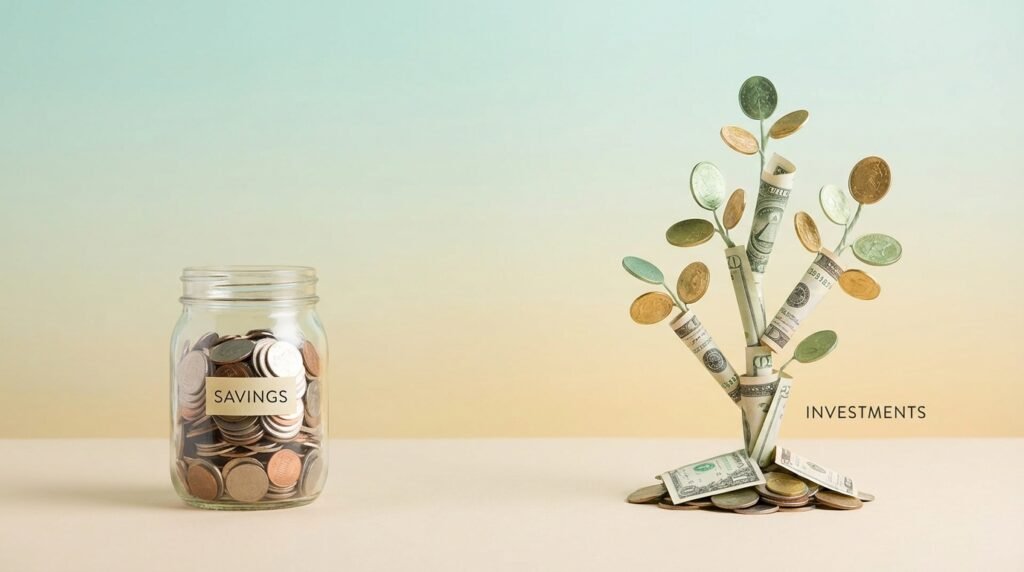
- 💰 Savings = your safety net (emergency fund, short-term goals)
- 📈 Investments = your wealth-building engine (retirement, education, financial freedom)
A smart financial plan uses both. Build your emergency fund first (3–6 months of expenses), then redirect extra cash into regular investments.
The Bottom Line
If you want your money to grow — really grow — regular investing is the move. Start small, stay consistent, and let compounding do the heavy lifting. The best time to start was yesterday. The second best time? Right now.
Your future self isn’t asking for perfection. Just a start.